
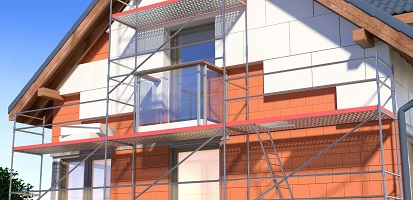
[:it]Cappotti tradizionali vs cappotti nanotecnologici.[:en]Traditional coats vs nanotechnology coats.[:]
pubblicato: sabato, 5 Marzo, 2022
[:it]
Cappotti tradizionali vs cappotti nanotecnologici.
È possibile isolare termicamente una parete senza aumentarne lo spessore?
Ing. Cristian Angeli 02/03/2022
L’intervento di manutenzione senza dubbio più gettonato in ambito condominiale è quello che prevede la realizzazione del cappotto termico. Ed è comprensibile, visto che il costo dell’energia nell’ultimo anno è più che raddoppiato.
Realizzare un cappotto è semplice, economico e conveniente, anche perché la spesa può fruire delle super agevolazioni al 110% (ecobonus). Per farlo si impiega solitamente il polistirene espanso (o polistirolo o EPS), che è l’isolante più diffuso e anche più collaudato per la coibentazione degli edifici.
Tranne nelle zone climatiche estreme si utilizzano pannelli di spessore variabile da 4 a 10-12cm, in relazione alle caratteristiche dell’edificio e del pacchetto murario con cui è realizzato. Lo spessore dipende inoltre dalla classe energetica che si vuole raggiungere e dalle specifiche caratteristiche dell’isolante.
Infatti anche nell’ambito del medesimo materiale, ad esempio dei polistiroli, esistono “gamme” di prodotto di diversa qualità e con valori specifici di conducibilità termica (*).
L’applicazione è relativamente veloce, poiché si interviene dall’esterno incollando e fissando meccanicamente le lastre sull’intonaco preesistente. A seguire si ricopre il tutto mediante la cosiddetta “rasatura”, ovvero una protezione costituita da una apposita rete d’armo a sua volta finita con uno strato sottilissimo di malta adesiva che, tinteggiata, conferisce l’aspetto esteriore più desiderato.
La maggior parte degli edifici italiani, sia di nuova costruzione sia ristrutturati, presentano un sistema di coibentazione di questo tipo.
Il problema dei balconi
La realizzazione del cappotto termico a volte può creare problemi in corrispondenza dei balconi poiché, con il suo spessore, ne restringe la superficie calpestabile. In alcune realtà cittadine lo spazio è denaro e anche pochi centimetri in meno possono creare notevoli malumori.
Ma possono esserci anche altri problemi, poiché le pareti dei balconi sono spesso ricolme di utilities: caldaie, unità moto condensanti, appliques, armadi, tendaggi, fioriere e arredi vari.
Poi bisogna tener conto degli adattamenti necessari in corrispondenza dei serramenti, che a volte possono interessare anche gli interni.
A tale proposito sono ormai note le recenti sentenze che hanno annullato delibere condominiali che, approvando l’esecuzione del cappotto sui balconi (e quindi riducendo la superficie di parti a tutti gli effetti private), andavano a ledere i diritti dei singoli condòmini che le avevano impugnate.
Al contrario il Tribunale di Milano non ha sospeso una delibera che prevedeva l’installazione del cappotto anche nelle proprietà esclusive solo perché la decisione assembleare espressamente aveva previsto la facoltà per il condòmino dissenziente di non realizzare il cappotto sul proprio balcone ricorrendo ad altre soluzioni (Trib. Milano 13 agosto 2021).
C’è una logica, perché quando si effettua l’efficientamento energetico di un edificio la coibentazione deve essere omogenea su tutto l’involucro disperdente e quindi anche i balconi devono essere coibentati, in un modo o nell’altro.
Diversamente verrebbe meno l’esigenza della collettività dei condòmini, in quanto il professionista incaricato dall’assemblea di progettare gli isolamenti difficilmente riuscirebbe a far quadrare i conti previsti dalla ex legge 10/91.
Centimetro più, centimetro meno, i problemi non cambiano
In alternativa ai cappotti realizzati con materiali tradizionali si stanno diffondendo sistemi realizzati con pannelli a base di gel di silice, anche conosciuti con il nome di nano-cappotti, che permettono di ridurre, a parità di prestazione isolante, lo spessore del rivestimento.
Esistono vari marchi commerciali di questi prodotti, per la cui definizione e per le cui caratteristiche può essere opportuno fare riferimento ai prezziari ufficialmente riconosciuti in Italia, ad esempio quello edito dalla DEI, che li descrive come “pannelli isolanti a base di aerogel, a diffusione aperta e a diffusione capillare” aventi “conduttività termica pari a 0.015W/mK, accoppiati ad una membrana traspirante in polipropilene”. Il medesimo prezzario ne specifica i costi comprensivi di posa in opera per spessori variabili da 6 a 60mm, che risultano -n volte più alti di quelli di un cappotto di analoghe caratteristiche termiche realizzato in pannelli polistirene espanso.
Pro e contro come in tutte le cose.
La riflessione – e la scelta – si deve spostare sul piano tecnico.
È vero che la realizzazione di un cappotto tradizionale porta via un po’ di spazio, con tutto ciò che ne consegue, ma non si può non rilevare che anche l’impiego (corretto) di cappotti d’avanguardia richiede spessori dell’ordine di qualche centimetro, e non di qualche millimetro come a volte si dice. Viene da chiedersi pertanto se ne valga la pena, considerando non lo spessore in valore assoluto, ma la differenza tra i due.
Spetta come sempre al professionista fare le opportune valutazioni, anche sul piano certificativo dei prodotti, tenendo conto del rapporto costi/benefici.
Fonte: https://www.condominioweb.com/cappotti-tradizionali-vs-cappotti-nanotecnologici.19039
GECOSEI di Giuseppina Napolitano

[:en]
Traditional coats vs nanotechnology coats.
Is it possible to thermally insulate a wall without increasing its thickness?
Ing. Cristian Angeli 02/03/2022
Undoubtedly the most popular maintenance intervention in the condominium area is the one that involves the construction of the thermal coat. And it is understandable, given that the cost of energy in the last year has more than doubled.
Making a coat is simple, cheap and convenient, also because the shopping can take advantage of the 110% super concessions (eco-bonus). To do this, expanded polystyrene (or polystyrene or EPS) is usually used, which is the most widespread and also the most tested insulator for the insulation of buildings.
Except in extreme climatic zones, panels of variable thickness from 4 to 10-12cm are used, in relation to the characteristics of the building and the masonry package with which it is made. The thickness also depends on the energy class to be achieved and on the specific characteristics of the insulation.
In fact, even within the same material, for example polystyrene, there are product “ranges” of different quality and with specific values of thermal conductivity (*).
The application is relatively fast, as it is done from the outside by gluing and mechanically fixing the slabs on the pre-existing plaster. Then everything is covered by means of the so-called “smoothing”, that is a protection consisting of a special reinforcement mesh in turn finished with a very thin layer of adhesive mortar which, painted, gives the most desired exterior appearance.
Most of the Italian buildings, both new and renovated, have an insulation system of this type.
The problem of balconies
The realization of the thermal coat can sometimes create problems in correspondence of the balconies because, with its thickness, it narrows the walkable surface. In some cities, space is money and even a few centimeters less can create considerable discontent.
But there can also be other problems, since the walls of the balconies are often filled with utilities: boilers, condensing units, appliques, wardrobes, curtains, flower boxes and various furnishings.
Then it is necessary to take into account the necessary adaptations in correspondence with the windows, which can sometimes also affect the interiors.
In this regard, the recent judgments are now known which canceled condominium resolutions which, by approving the execution of the coat on the balconies (and therefore reducing the surface area of private parts in all respects), infringed the rights of the individual condominiums who had them. challenged.
On the contrary, the Court of Milan did not suspend a resolution that provided for the installation of the coat also in the exclusive properties only because the assembly decision expressly provided for the faculty for the dissenting condominium not to make the coat on their balcony by resorting to other solutions (Trib . Milan 13 August 2021).
There is a logic, because when energy efficiency is carried out in a building, the insulation must be homogeneous throughout the dispersing envelope and therefore the balconies must also be insulated, in one way or another.
Otherwise, the need for the community of condominiums would disappear, as the professional appointed by the assembly to design the insulations would hardly be able to make ends meet under the former law 10/91.
Centimeter more, centimeter less, the problems do not change
As an alternative to coats made with traditional materials, systems made with silica gel-based panels, also known as nano-coats, are spreading, which make it possible to reduce the thickness of the coating, with the same insulating performance.
There are various trademarks of these products, for whose definition and characteristics it may be appropriate to refer to the price lists officially recognized in Italy, for example the one published by DEI, which describes them as “airgel-based insulating panels, diffusion open and capillary diffusion ” having ” thermal conductivity equal to 0.015W / mK, coupled to a breathable polypropylene membrane “. The same price list specifies the costs inclusive of installation for thicknesses ranging from 6 to 60mm, which are n times higher than those of a coat of similar thermal characteristics made of expanded polystyrene panels.
Pros and cons as in all things.
The reflection – and the choice – must be shifted to the technical level.
It is true that the creation of a traditional coat takes away a bit of space, with all that follows, but it cannot be overlooked that even the (correct) use of avant-garde coats requires thicknesses of the order of some centimeter, and not a few millimeters as is sometimes said. One wonders therefore if it is worth it, considering not the thickness in absolute value, but the difference between the two.
As always, it is up to the professional to make the appropriate assessments, also in terms of product certification, taking into account the cost / benefit ratio.
Source: https://www.condominioweb.com/cappotti-tradizioni-vs-cappotti-nanotecnologi.19039
GECOSEI by Giuseppina Napolitano
[:]