
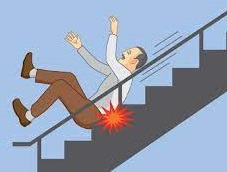
[:it]Condòmino che cade dalle scale? Il risarcimento è difficile.[:en]Condominium falling down the stairs? Compensation is difficult.[:]
pubblicato: lunedì, 31 Maggio, 2021
[:it]
Condòmino che cade dalle scale? Il risarcimento è difficile.
Nessun risarcimento del danno al condomino che scivola sulle scale condominiali atteso che lo stesso conosce perfettamente i luoghi e la loro pericolosità.
Avv. Caterina Natalotto – Foro di Palermo 25/05/2021l
La caduta all’interno del condominio deve ritenersi imputabile al caso fortuito, consistente nella colpa del danneggiato, laddove quest’ultimo, con buona visibilità, adottando un comportamento ordinariamente cauto, avrebbe potuto evitare la caduta stessa.
Infatti, quanto più la situazione di possibile pericolo è suscettibile di essere prevista e superata attraverso l’uso della normale diligenza, tanto più incidente deve considerarsi l’efficienza causale del comportamento del danneggiato nel dinamismo causale del danno, fino a interrompere il nesso eziologico tra fatto ed evento dannoso.
Il danno lamentato da una condomina che scivolava per le scale cndominiali a causa del cattivo stato di manutenzione degli scalini, secondo il Tribunale di Savona con sentenza n. 328 del 27 aprile 2021, deve essere ricondotto in via esclusiva alla condotta imprudente e/o negligente della stessa che dichiarava di conoscere perfettamente lo stato dei luoghi in essere da molti anni, e che non era intervenuta alcuna modifica.
Il decidente non ha ritenuto riconoscere la sussistenza di alcuna insidia e/o trabocchetto bensì solo una condotta imprudente e/o negligente della vittima.
Caduta dalle scale e responsabilità oggettiva ex art. 2051 c.c.
Per la giurisprudenza maggioritaria, il condominio in qualità di custode dei beni comuni risponde per responsabilità oggettiva configurabile in virtù della sola relazione materiale sussistente con i beni in comune e che, in quanto tale, risulta esclusa soltanto quando “l’evento sia imputabile ad un caso fortuito riconducibile al profilo causale e cioè quando si sia in presenza di un fattore esterno che, interferendo nella situazione in atto, abbia di per sé prodotto l’evento, assumendo il carattere del c.d. fortuito autonomo, ovvero quando si versi nei casi in cui la cosa sia stata resa fattore eziologico dell’evento dannoso da un elemento o fatto estraneo del tutto eccezionale (c.d. fortuito incidentale), e per ciò stesso imprevedibile” (Cass. civ. 11695/2009).
Ciò nonostante, ottenere il risarcimento per danno da caduta in ambito condominiale è sempre più difficile. Non basta fornire la prova del nesso di causalità tra l’evento ed il danno ovvero l’esistenza del trabocchetto o insidia, diventa fondamentale indagare il “comportamento” tenuto dal danneggiato nell’occorso.
La condotta del danneggiato nell’incidenza causale dell’evento dannoso
L’art. 2051 c.c., oltre a non dispensare il danneggiato dal provare il nesso causale tra cosa in custodia e danno, ossia dimostrare che l’evento si è prodotto come conseguenza normale della particolare condizione, potenzialmente offensiva, posseduta dalla cosa, esclude la responsabilità del custode della cosa comune se questo prova il caso fortuito, nel quale può rientrare anche la condotta della stessa vittima.
Secondo la tradizionale giurisprudenza di legittimità il danno rilevante – di cui cioè il custode è responsabile – prescinde dalle caratteristiche della cosa custodita, sia quindi essa più o meno pericolosa, c.d. sagente (ovvero dotata di intrinseco dinamismo) oppure no rileva piuttosto di altri fattori esterni.
Si cita infatti la Cass. civ. n. 2480 in data 1/2/2018, secondo cui in tema di responsabilità civile per danni da cose in custodia, “la condotta del danneggiato, che entri in interazione con la cosa, si atteggia diversamente a seconda del grado di incidenza causale sull’evento dannoso, in applicazione – anche ufficiosa – dell’art. 1227, comma 1, c.c., richiedendo una valutazione che tenga conto del dovere generale di ragionevole cautela, riconducibile al principio di solidarietà espresso dall’art. 2 Cost., sicché, quanto più la situazione di possibile danno è suscettibile di essere prevista e superata attraverso l’adozione da parte del danneggiato delle cautele normalmente attese e prevedibili in rapporto alle circostanze, tanto più incidente deve considerarsi l’efficienza causale del comportamento imprudente del medesimo nel dinamismo causale del danno, fino a rendere possibile che detto comportamento interrompa il nesso eziologico tra fatto ed evento dannoso, quando sia da escludere che lo stesso comportamento costituisca un’evenienza ragionevole o accettabile secondo un criterio probabilistico di regolarità causale, connotandosi, invece, per l’esclusiva efficienza causale nella produzione del sinistro“.
Conforme Cass. Sez. 6 – 3, ordinanza n. 9315 del 3/4/2019, ed in senso analogo v. altresì Cass. Sez. 3, sentenza n. 15761 del 29/7/2016, secondo cui sulla responsabilità dell’ente proprietario di una strada aperta al pubblico può influire la condotta della vittima, la quale, però, assume efficacia causale esclusiva ove sia qualificabile come abnorme, cioè estranea al novero delle possibilità fattuali congruamente prevedibili in relazione al contesto, potendo, in caso contrario, rilevare ai fini del concorso causale ai sensi dell’art. 1227 c.c.
Parimenti, secondo Cass. III civ. n. 25837 del 31/10/2017, la condotta della vittima del danno causato da una cosa in custodia costituisce “caso fortuito”, idoneo ad escludere la responsabilità del custode ex art. 2051 c.c., ove sia colposa ed imprevedibile. V. altresì similmente Cass. Sez. 6-3, ordinanza n. 27724 del 30/10/2018: il criterio di imputazione della responsabilità di cui all’art. 2051 c.c. ha carattere oggettivo, essendo sufficiente, per la sua configurazione, la dimostrazione da parte dell’attore del messo di casualità tra la cosa in custodia ed il danno, mentre sul custode grava l’onere della prova liberatoria del caso fortuito, inteso come fattore che, in base ai principi della regolarità o adeguatezza causale, esclude il nesso eziologico tra cosa e danno, ed è comprensivo della condotta incauta della vittima, che assume rilievo ai fini del concorso di responsabilità ai sensi dell’art. 1227, comma 1, c.c., e deve essere graduata sulla base di un accertamento in ordine alla sua effettiva incidenza causale sull’evento dannoso, che può anche essere esclusiva. Conforme id. n. 30775 del 22/12/2017.
Ricapitolando dunque possiamo sintetizzare dicendo che in caso di caduta sulle scale condominiali, la vittima ha l’onere di provare il danno e il nesso causale tra la cosa e il danno, mentre non gli spetta dare prova dell’insidiosità della res, ed il custode/condominio ha l’onus probandi del c.d. caso fortuito, ovvero la condotta poco accorta o imprudente della vittima vale a dire quell’elemento esterno che cagiona o concorre a cagionare l’incidente eliminando la responsabilità oggettiva del custode della cosa.
GECOSEI di Giuseppina Napolitano

[:en]
Condominium falling down the stairs? Compensation is difficult.
No compensation for damage to the condominium who slips on the condominium stairs since he knows perfectly the places and their danger.
Avv. Caterina Natalotto – Court of Palermo 25/05 / 2021l
L to fall within the condominium must be considered due to the fortuitous event, consisting in the fault of the injured, where the latter, with good visibility, by adopting an ordinarily cautious behavior, could prevent the fall thereof.
In fact, the more the situation of possible danger is likely to be foreseen and overcome through the use of normal diligence, the more an accident must be considered the causal efficiency of the behavior of the injured party in the causal dynamism of the damage, until the etiological link between fact and harmful event.
The damage complained of by a condominium that slipped down the domestic stairs due to the poor state of maintenance of the steps, according to the Court of Savona with sentence no. 328 of 27 April 2021, must be traced exclusively to the imprudent and / or negligent conduct of the same which declared that it perfectly knew the state of the places in place for many years, and that no changes had been made.
The deciding party did not consider recognizing the existence of any pitfalls and / or pitfalls but only an imprudent and / or negligent conduct of the victim.
Falling down the stairs and strict liability pursuant to art. 2051 cc
According to the majority jurisprudence, the condominium as custodian of the common goods is liable for objective liability configurable by virtue of the only material relationship existing with the common goods and which, as such, is excluded only when ” the event is attributable to a fortuitous case attributable to the causal profile, that is when there is an external factor which, interfering in the current situation, has in itself produced the event, assuming the character of the so-called autonomous fortuitousness, or when it occurs in cases in which the thing has been made an etiological factor of the harmful event by a completely exceptional extraneous element or fact (so-called fortuitous incidental), and therefore unpredictable “(Cass. civ. 11695/2009).
Nevertheless, obtaining compensation for damage caused by a fall in a condominium is increasingly difficult. It is not enough to provide proof of the causal link between the event and the damage or the existence of the trap or trap, it becomes essential to investigate the “behavior” of the injured party in the event.
The conduct of the injured party in the causal incidence of the harmful event
The art. 2051 cc, in addition to not exempting the injured party from proving the causal link between the thing in custody and damage, that is to demonstrate that the event occurred as a normal consequence of the particular, potentially offensive condition possessed by the thing, excludes the responsibility of the custodian of the common thing if this proves the fortuitous case, which can also include the conduct of the same victim.
According to the traditional jurisprudence of legitimacy, the significant damage – for which the custodian is responsible – is regardless of the characteristics of the thing being guarded , whether it is therefore more or less dangerous, so-called sagente (or endowed with intrinsic dynamism) or does not reveal rather other external factors .
In fact, the Court of Cassation is mentioned. civ. n. 2480 on 1/2/2018, according to which in terms of civil liability for damage from things in custody, ” the conduct of the injured party, who enters into interaction with the thing, behaves differently depending on the degree of causal impact on the event harmful, in application – even unofficially – of article 1227, paragraph 1, of the Italian Civil Code, requiring an evaluation that takes into account the general duty of reasonable caution, attributable to the principle of solidarity expressed by article 2 of the Constitution, so that, as much as possible the situation of possible damage is likely to be foreseen and overcome through the adoption by the injured party of the precautions normally expected and foreseeable in relation to the circumstances, the more the accident must be considered the causal efficiency of the imprudent behavior of the same in the causal dynamism of the damage , to the point of making it possible for said behavior to interrupt the etiological link between fact and harmful event, when it is to be excluded that the same behavior constitutes uses a reasonable or acceptable eventuality according to a probabilistic criterion of causal regularity, connoting itself, instead, for the exclusive causal efficiency in the production of the accident “.
Compliant with Cass. Section 6 – 3, ordinance no. 9315 of 3/4/2019, and in a similar sense v. also Cass. Section 3, sentence no. 15761 of 29/7/2016, according to which the responsibility of the owner of a road open to the public can be influenced by the conduct of the victim, who, however, assumes exclusive causal efficacy where it can be classified as abnormal, i.e. extraneous to the range of possibilities factuals that can be reasonably foreseen in relation to the context, being able, otherwise, to detect for the purposes of the causal competition pursuant to art. 1227 cc
Likewise, according to Cass. III civ. n. 25837 of 31/10/2017, the conduct of the victim of the damage caused by a thing in custody constitutes a “fortuitous event”, capable of excluding the responsibility of the custodian pursuant to art. 2051 cc, where it is negligent and unpredictable. See also similarly Cass. Section 6-3, ordinance no. 27724 of 30/10/2018: the criterion for attributing responsibility pursuant to art. 2051 cc has an objective character, being sufficient, for its configuration, the demonstration by the plaintiff of the causal agent between the thing in custody and the damage , while the custodian bears the burden of the release proof of the fortuitous event, understood as a factor which, on the basis of the principles of causal regularity or adequacy, excludes the etiological link between thing and damage, and includes the careless conduct of the victim, which is relevant for the purposes of the concurrence of responsibility pursuant to art. 1227, paragraph 1, of the Italian Civil Code, and must be graduated on the basis of an assessment as to its actual causal impact on the harmful event, which can also be exclusive. Compliant id. n. 30775 of 22/12/2017.
In summary, therefore, we can summarize by saying that in the event of a fall on the condominium stairs , the victim has the burden of proving the damage and the causal link between the thing and the damage, while it is not up to him to prove the insidiousness of the res, and the caretaker / condominium has the onus probandi of the so-called fortuitous event, that is the careless or imprudent conduct of the victim, that is to say that external element that causes or contributes to causing the accident by eliminating the objective responsibility of the guardian of the thing.
GECOSEI by Giuseppina Napolitano
[:]